
Menu
 
Portfolio
 
Terms of Use
 

Newark Castle, Nottinghamshire

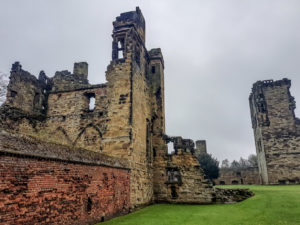
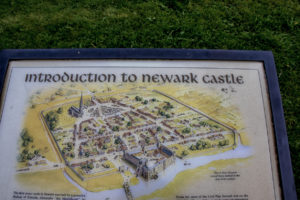
Newark Castle, in Newark-on-Trent, in the English county of Nottinghamshire was founded in the mid 12th century by Alexander, Bishop of Lincoln. Originally a timber castle, it was rebuilt in stone towards the end of the century. Dismantled in the 17th century after the English Civil War.

In a charter generally thought to date to 1135, King Henry I granted the Bishop of Lincoln permission to build a castle. Alexander also established a mint at the castle. This early castle was most likely of timber construction and was rebuilt in stone towards the end of the century. King John died after a feast at this castle on the night of 18 October 1216 from dysentery, according to tradition from eating a “surfeit of peaches”

The castle was slighted in 1648 and left derelict. Between 1845 and 1848 architect Anthony Salvin restored the castle, and in 1889 the corporation of Newark purchased the building and carried out further restoration work.

More posts..

The Rollright Stones

  The Rollright Stones is a complex of three Neolithic and Bronze Age megalithic monuments near the village of Long Compton, on the borders of Oxfordshire and Warwickshire. Constructed from local oolitic limestone, the three monuments now known as the King’s Men and the Whispering

Read More
Eye Castle

Eye Castle is a motte and bailey castle, built during the reign of William I by William Malet, who died fighting Hereward the Wake in 1071. The Malet family also controlled the surrounding Honour of Eye, a significant collection of estates centering on the castle,

Read More
Tamworth Castle

Tamworth Castle is a Norman castle overlooking the mouth of the River Anker into the Tame in the town of Tamworth in Staffordshire, England. Before boundary changes in 1889, however, the castle was within the edge of Warwickshire while most of the town belonged to

Read More
Jórvík

Scandinavian York, referred to at the time as Jórvík or Danish York is a term used by historians for the south of Northumbria (modern-day Yorkshire) during the period of the late 9th century and the first half of the 10th century, when it was dominated

Read More
Share on facebook
Share on twitter
Share on linkedin
Share on pinterest
error: