
Menu
 
Portfolio
 
Terms of Use
 

Newark Castle, Nottinghamshire

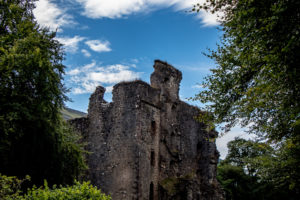
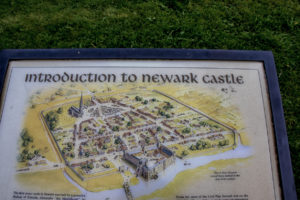
Newark Castle, in Newark-on-Trent, in the English county of Nottinghamshire was founded in the mid 12th century by Alexander, Bishop of Lincoln. Originally a timber castle, it was rebuilt in stone towards the end of the century. Dismantled in the 17th century after the English Civil War.

In a charter generally thought to date to 1135, King Henry I granted the Bishop of Lincoln permission to build a castle. Alexander also established a mint at the castle. This early castle was most likely of timber construction and was rebuilt in stone towards the end of the century. King John died after a feast at this castle on the night of 18 October 1216 from dysentery, according to tradition from eating a “surfeit of peaches”

The castle was slighted in 1648 and left derelict. Between 1845 and 1848 architect Anthony Salvin restored the castle, and in 1889 the corporation of Newark purchased the building and carried out further restoration work.

More posts..

Castle Rising

Castle Rising is a ruined medieval fortification in the village of Castle Rising, Norfolk, England. It was built soon after 1138 by William d’Aubigny II, who had risen through the ranks of the Anglo-Norman nobility to become the Earl of Arundel. With his new wealth,

Read More
Bothwell Castle

Bothwell Castle is a large medieval castle, sited on a high, steep bank, above a bend in the River Clyde in South Lanarkshire, Scotland. It is located between Bothwell and Uddingston, about 10 miles south-east of Glasgow. Construction of the castle was begun in the

Read More
Stonehenge

Stonehenge is a prehistoric monument in Wiltshire, England, west of Amesbury and north of Salisbury. Stonehenge’s ring of standing stones is set within earthworks in the middle of the densest complex of Neolithic and Bronze Age monuments in England, including several hundred burial mounds. Archaeologists

Read More
Conwy Castle

Conwy Castle is a fortification in Conwy, located in North Wales. It was built by Edward I, during his conquest of Wales, between 1283 and 1289. Constructed as part of a wider project to create the walled town of Conwy. Over the next few centuries,

Read More
Share on facebook
Share on twitter
Share on linkedin
Share on pinterest
error: