
Menu
 
Portfolio
 
Terms of Use
 

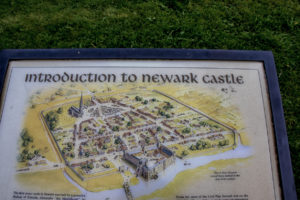
Newark Castle, Nottinghamshire

Newark Castle, in Newark-on-Trent, in the English county of Nottinghamshire was founded in the mid 12th century by Alexander, Bishop of Lincoln. Originally a timber castle, it was rebuilt in stone towards the end of the century. Dismantled in the 17th century after the English Civil War.

In a charter generally thought to date to 1135, King Henry I granted the Bishop of Lincoln permission to build a castle. Alexander also established a mint at the castle. This early castle was most likely of timber construction and was rebuilt in stone towards the end of the century. King John died after a feast at this castle on the night of 18 October 1216 from dysentery, according to tradition from eating a “surfeit of peaches”

The castle was slighted in 1648 and left derelict. Between 1845 and 1848 architect Anthony Salvin restored the castle, and in 1889 the corporation of Newark purchased the building and carried out further restoration work.

More posts..

Danebury Iron Age Hill Fort

  Danebury Iron Age Hill Fort is one of the most studied Iron Age hill forts in Europe and a Scheduled Ancient Monument. ‘Iron Age’ describes the period between the end of the Bronze Age and the start of the Roman period (700BC to AD43).

Read More
Avebury Stones

  West Kennet Stone Avenue (pictured) was an avenue of two parallel lines of stones that ran between the Neolithic sites of Avebury Ring and The Sanctuary. A second avenue, called Beckhampton Avenue led west from Avebury towards Beckhampton Long Barrow. Avebury Ring is a

Read More
Stirling Castle

Stirling Castle, located in Stirling, is one of the largest and most important castles in Scotland, both historically and architecturally. The castle sits atop Castle Hill, an intrusive crag, which forms part of the Stirling Sill geological formation. It is surrounded on three sides by

Read More
Bamburgh Castle

Bamburgh Castle is a castle on the northeast coast of England, by the village of Bamburgh in Northumberland. The site was originally the location of a Celtic Brittonic fort known as Din Guarie and may have been the capital of the kingdom of Bernicia from

Read More
Share on facebook
Share on twitter
Share on linkedin
Share on pinterest
error: