
Menu
 
Portfolio
 
Terms of Use


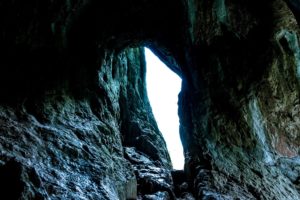
Excavations in 1864–65 and 1927–35 found human and animal remains, stone tools, pottery, amber beads, and bronze items within Thor’s Cave and the adjacent Thor’s Fissure Cavern. The caves are estimated to have contained the burial sites of at least seven people. The finds suggest the cavern was occupied from the end of the Palaeolithic period, with more intensive use during the Iron Age and Roman periods.



More posts..

Avebury Stones

  West Kennet Stone Avenue (pictured) was an avenue of two parallel lines of stones that ran between the Neolithic sites of Avebury Ring and The Sanctuary. A second avenue, called Beckhampton Avenue led west from Avebury towards Beckhampton Long Barrow. Avebury Ring is a

Read More
Ipswich Hoards

There are two notable Ipswich Hoards. The first was a hoard of Anglo-Saxon coins discovered in 1863. The second was a hoard of six Iron Age gold torcs that was discovered in 1968 and 1969. The latter hoard has been described as second only to

Read More
Monmouth Castle

Monmouth Castle is a castle in the town of Monmouth, the county town of Monmouthshire, southeast Wales. It is a Grade I listed building and scheduled monument. Monmouth Castle is located close to the center of Monmouth on a hill above the River Monnow, behind

Read More
Grime’s Graves

Grime’s Graves is a large Neolithic flint mining complex in Norfolk, England. It was worked between c. 2600 and c. 2300 BC, although production may have continued well into the Bronze and Iron Ages (and later) owing to the low cost of flint compared with

Read More
Share on facebook
Share on twitter
Share on linkedin
Share on pinterest
error: