
Menu
 
Portfolio
 
Terms of Use
 

Prehistoric settlement: The site at West Stow has shown evidence of human habitation throughout British prehistory. Indeed, the wider Lark Valley contains the greatest known concentration of prehistoric settlements in the region of East Anglia.

Mesolithic: Excavation at West Stow has discovered evidence for hunter-gatherers living in the area during the Mesolithic, or “Middle Stone Age” period. Temporarily camping on the knoll, they left behind them five or six dense concentrations of Sauveterrian-style waste lithic flakes, blades, cores, and other stone implements. Similar scatters of Mesolithic worked flints have been found across the valley area.
Neolithic and Bronze Ages: Grooved ware and petit tranchet-style arrowheads dating from the Neolithic Age have been found in a field adjacent to the West Stow site.
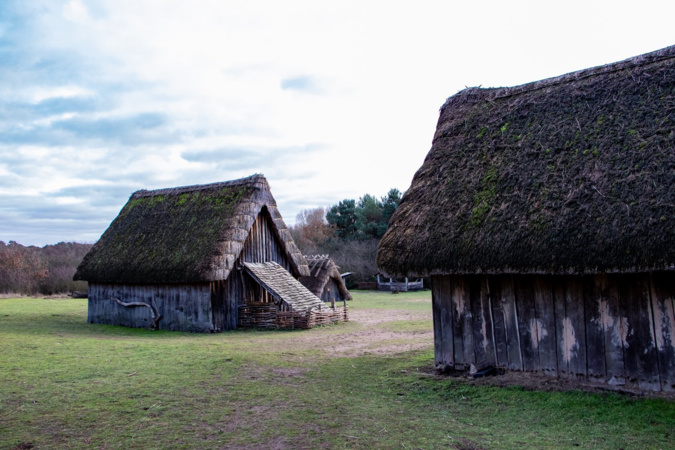
Anglo-Saxon: During the early Anglo-Saxon period, West Stow was the site of a small village made up of timber buildings.
More posts..

Stonehenge

Stonehenge is a prehistoric monument in Wiltshire, England, west of Amesbury and north of Salisbury. Stonehenge’s ring of standing stones is set within earthworks in the middle of the densest complex of Neolithic and Bronze Age monuments in England, including several hundred burial mounds. Archaeologists

Read More
Castlerigg Stone Circle

The stone circle at Castlerigg is situated near Keswick in Cumbria, North West England. One of around 1,300 stone circles in the British Isles and Brittany, it was constructed as a part of a megalithic tradition that lasted from 3,300 to 900 BC, during the

Read More
The Newark Torc

  The Newark Torc is a complete Iron Age gold alloy torc found on the outskirts of Newark-on-Trent, Nottinghamshire. The torc was probably made in Norfolk and it closely resembles the Great Torc from Snettisham and is also closely similar to one found at Sedgeford,

Read More
Mountfitchet Castle

Mountfitchet Castle is a Norman ringwork and bailey fortification in Stansted Mountfitchet, Essex, England. The site is currently in use as a Living history museum, complete with livestock that would have been kept by people during the period that the castle was in use. The

Read More
Share on facebook
Share on twitter
Share on linkedin
Share on pinterest
error: