
Menu
 
Portfolio
 
Terms of Use
 

Prehistoric settlement: The site at West Stow has shown evidence of human habitation throughout British prehistory. Indeed, the wider Lark Valley contains the greatest known concentration of prehistoric settlements in the region of East Anglia.

Mesolithic: Excavation at West Stow has discovered evidence for hunter-gatherers living in the area during the Mesolithic, or “Middle Stone Age” period. Temporarily camping on the knoll, they left behind them five or six dense concentrations of Sauveterrian-style waste lithic flakes, blades, cores, and other stone implements. Similar scatters of Mesolithic worked flints have been found across the valley area.
Neolithic and Bronze Ages: Grooved ware and petit tranchet-style arrowheads dating from the Neolithic Age have been found in a field adjacent to the West Stow site.
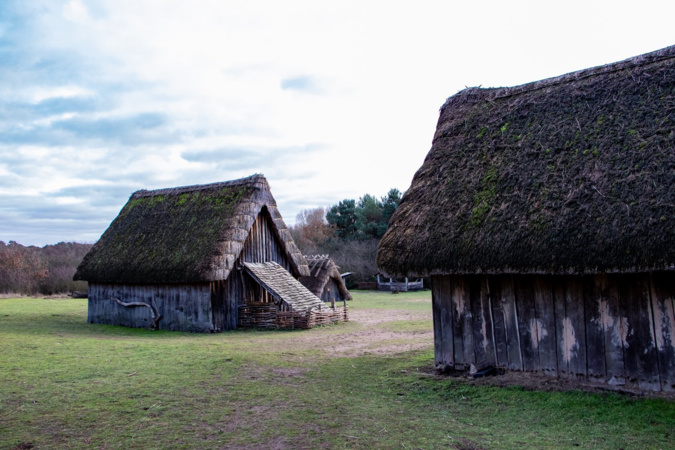
Anglo-Saxon: During the early Anglo-Saxon period, West Stow was the site of a small village made up of timber buildings.
More posts..

Orford Castle

Orford Castle is a castle in Orford in the English county of Suffolk, 12 miles northeast of Ipswich, with views over Orford Ness. It was built between 1165 and 1173 by Henry II of England.   Prior to the building of Orford Castle, Suffolk was

Read More
Alnwick Castle

Alnwick Castle is a castle and country house in Alnwick in the English county of Northumberland. It is the seat of The 12th Duke of Northumberland, built following the Norman conquest and renovated and remodeled a number of times.   Alnwick Castle guards a road

Read More
Danebury Iron Age Hill Fort

  Danebury Iron Age Hill Fort is one of the most studied Iron Age hill forts in Europe and a Scheduled Ancient Monument. ‘Iron Age’ describes the period between the end of the Bronze Age and the start of the Roman period (700BC to AD43).

Read More
Wayland’s Smithy

Wayland’s Smithy is a chambered long barrow located near the village of Ashbury in the south-eastern English county of Oxfordshire. Probably constructed in the thirty-sixth century BC, during Britain’s Early Neolithic period, today it survives in a partially reconstructed state.   Wayland’s Smithy is along

Read More
Share on facebook
Share on twitter
Share on linkedin
Share on pinterest
error: