
Menu
 
Portfolio
 
Terms of Use
 

Orford Castle

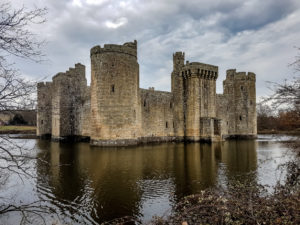
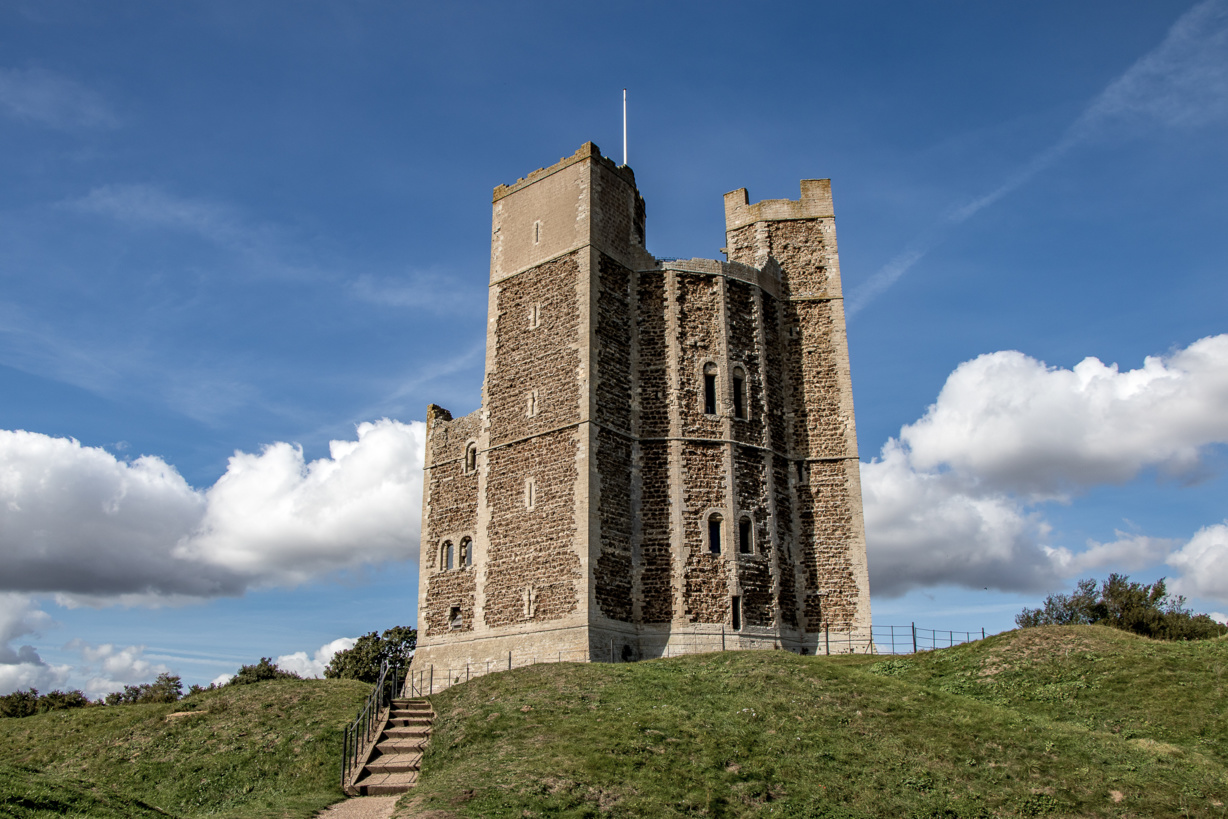
Orford Castle is a castle in Orford in the English county of Suffolk, 12 miles northeast of Ipswich, with views over Orford Ness. It was built between 1165 and 1173 by Henry II of England.


Prior to the building of Orford Castle, Suffolk was dominated by the Bigod family, who held the title of the Earl of Norfolk and owned key castles at Framlingham, Bungay, Walton, and Thetford. Hugh Bigod had been one of a group of dissenting barons during the Anarchy in the reign of King Stephen, and Henry II wished to re-establish royal influence across the region. Henry confiscated the four castles from Hugh but returned Framlingham and Bungay to Hugh in 1165. Henry then decided to build his own royal castle at Orford, near Framlingham, and construction work began in 1165, concluding in 1173. The Orford site was around 2 miles from the sea, lying on flat ground with swampy terrain slowly stretching away down to the river Ore, about 1⁄2 mile away.


More posts..

Thor’s Cave

  Excavations in 1864–65 and 1927–35 found human and animal remains, stone tools, pottery, amber beads, and bronze items within Thor’s Cave and the adjacent Thor’s Fissure Cavern. The caves are estimated to have contained the burial sites of at least seven people. The finds

Read More
Inverlochy Castle

Inverlochy Castle is a ruined, 13th-century castle near Inverlochy and Fort William, Highland, Scotland. The site of two battles, the castle remains largely unchanged since its construction.   Inverlochy Castle was built circa 1270–1280 by John “the Black” Comyn, Lord of Badenoch and Lochaber, and

Read More
Castle Rising

Castle Rising is a ruined medieval fortification in the village of Castle Rising, Norfolk, England. It was built soon after 1138 by William d’Aubigny II, who had risen through the ranks of the Anglo-Norman nobility to become the Earl of Arundel. With his new wealth,

Read More
Sutton Hoo

  Sutton Hoo is of primary importance because it sheds light on a period of English history (6/7th century) that is on the margin between myth, legend, and historical documentation. Use of the site culminated at a time when Rædwald of the East Angles played

Read More
Share on facebook
Share on twitter
Share on linkedin
Share on pinterest
error: