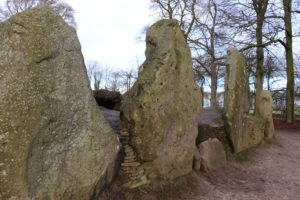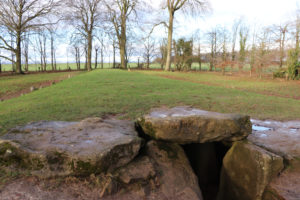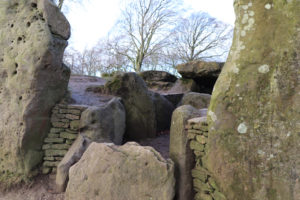


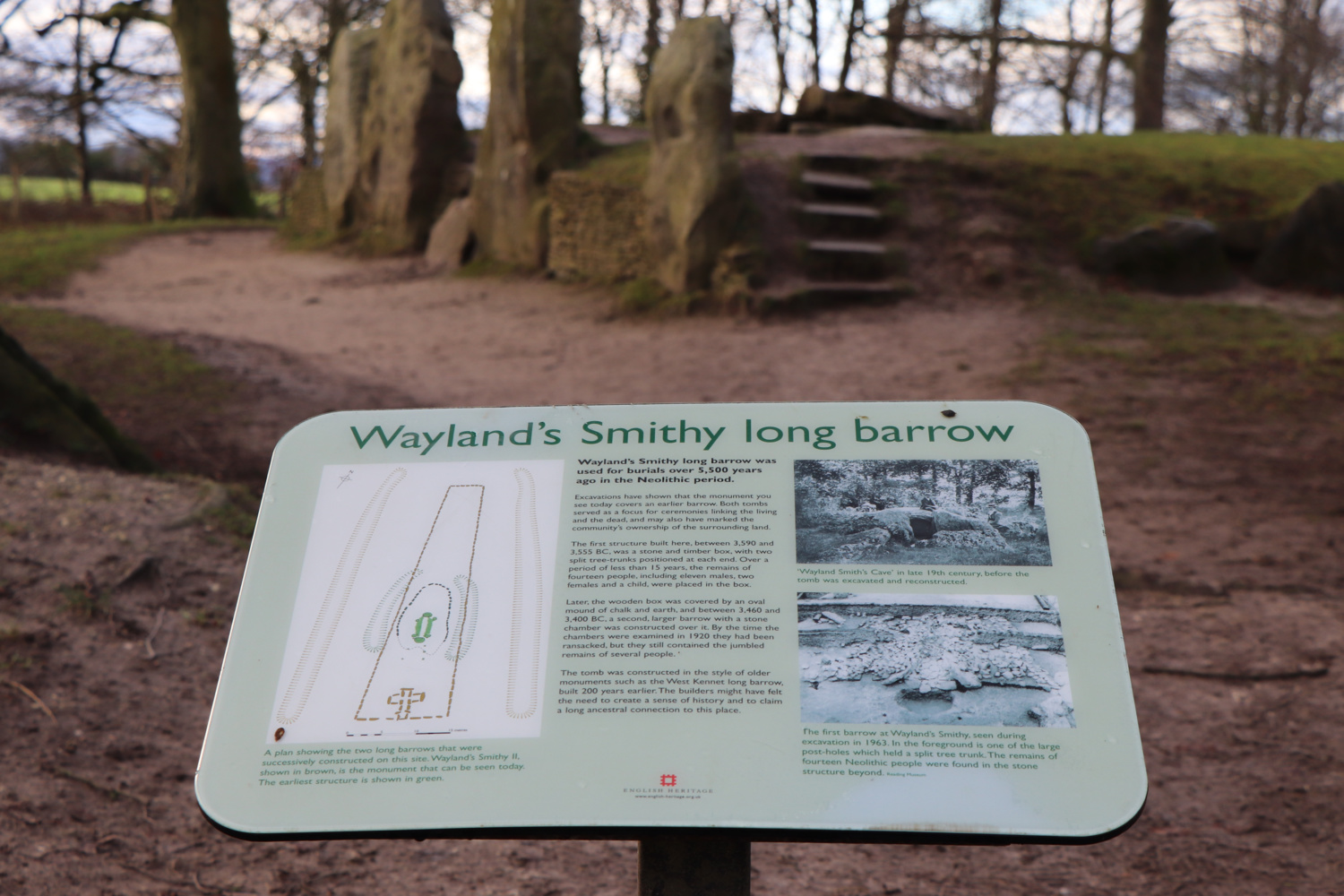
Wayland’s Smithy is a chambered long barrow located near the village of Ashbury in the south-eastern English county of Oxfordshire. Probably constructed in the thirty-sixth century BC, during Britain’s Early Neolithic period, today it survives in a partially reconstructed state.
Wayland’s Smithy is along the same hill as the Uffington White Horse and Uffington Castle, while it is also close to The Ridgeway, an ancient road running along the Berkshire Downs. In the early middle ages, the site became associated with the mythological figure Wayland the Smith, from which it gained its name.
The name “Wayland’s Smithy” is a reference to the mythological metal-worker Wayland the Smith. This character appears in Norse mythology, and a depiction of him is believed to be present on the Franks Casket, on display in the British Museum in London. The monument’s name is first recorded in an early medieval land charter from Compton Beauchamp, which has been attributed date of 955 AD.
In 1738, Francis Wise, who was then the under-keeper of the Bodleian Library, recorded a belief held about the site in local folklore. Like several other early commentators, Wise referred to the site not as “Wayland’s Smithy”, but only as “Wayland Smith”. Wise related that:
“All the account which the country people are able to give of it is ‘At this place lived formerly an invisible Smith, and if a traveler’s Horse had lost a Shoe upon the road, he had no more to do than to bring the Horse to this place with a piece of money and leaving both there for some little time, he might come again and find the money gone, but the Horse new shod”