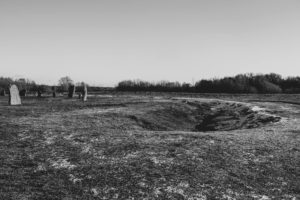



Devil’s Quoits Henge and Stone Circle – The site is believed to be from the Neolithic Period, between 4000 and 5000 years old, and is a Scheduled Ancient Monument.
The henge is a major class II circle henge monument of the Late Neolithic date. The henge ditch enclosed a circular area up to 120 meters across, with opposed entrances facing almost due east and west. The northern half of the henge appears to have had a second enclosing ditch circuit.
Within the henge were a stone circle and a central stone setting which may have been put up after the henge had been in use for some time, in the Early Bronze Age. The stone circle had a slightly ovoid plan and followed the same axis as the henge itself. It originally featured 36 stones, most of which were removed by the end of the Medieval period. The henge itself is at the center of a complex of later prehistoric monuments including ring ditches and other possible mortuary enclosures.
The name “Devil’s Quoits” is associated with a legend that states that the Devil once played quoits with a beggar for his soul and won by flinging the great stones. Tradition has it that the Devil and his opponent were sitting on the top of Wytham Hill, several miles away when they played their game.
The Quoits were restored between 2002 and 2008, with stones which had been knocked over or had fallen over being re-uprighted, and the surrounding earthworks re-built.