
Menu
 
Portfolio
 
Terms of Use
 

The Rollright Stones


The Rollright Stones is a complex of three Neolithic and Bronze Age megalithic monuments near the village of Long Compton, on the borders of Oxfordshire and Warwickshire. Constructed from local oolitic limestone, the three monuments now known as the King’s Men and the Whispering Knights in Oxfordshire and The King Stone in Warwickshire, are distinct in their design and purpose, and were built at different periods in late prehistory. The stretch of time during which the three monuments were erected bears witness to a continuous tradition of ritual behavior on sacred ground, from the 4th to the 2nd millennium BCE.

The first to be constructed was the Whispering Knights, a dolmen that dates to the Early or Middle Neolithic period. This was followed by the King’s Men, a stone circle which was constructed in the Late Neolithic or Early Bronze Age; unusually, it has parallels to other circles located further north, in the Lake District, implying a trade-based or ritual connection. The third monument, The King Stone, is a single monolith, and although it is not known when it was constructed.


 

More posts..

Urquhart Castle

Urquhart Castle sits beside Loch Ness in the Highlands of Scotland. The castle is on the A82 road, 21 kilometers south-west of Inverness and 2 kilometers east of the village of Drumnadrochit.   The name Urquhart derives from the 7th-century form Airdchartdan, itself a mix

Read More
Castlerigg Stone Circle

The stone circle at Castlerigg is situated near Keswick in Cumbria, North West England. One of around 1,300 stone circles in the British Isles and Brittany, it was constructed as a part of a megalithic tradition that lasted from 3,300 to 900 BC, during the

Read More
Bamburgh Castle

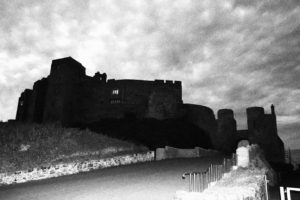
Bamburgh Castle is a castle on the northeast coast of England, by the village of Bamburgh in Northumberland. The site was originally the location of a Celtic Brittonic fort known as Din Guarie and may have been the capital of the kingdom of Bernicia from

Read More
Ipswich Hoards

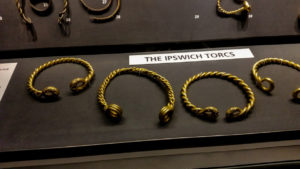
There are two notable Ipswich Hoards. The first was a hoard of Anglo-Saxon coins discovered in 1863. The second was a hoard of six Iron Age gold torcs that was discovered in 1968 and 1969. The latter hoard has been described as second only to

Read More
Share on facebook
Share on twitter
Share on linkedin
Share on pinterest
error: