
Menu
 
Portfolio
 
Terms of Use
 

The Rollright Stones


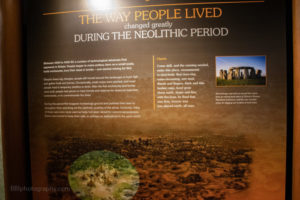
The Rollright Stones is a complex of three Neolithic and Bronze Age megalithic monuments near the village of Long Compton, on the borders of Oxfordshire and Warwickshire. Constructed from local oolitic limestone, the three monuments now known as the King’s Men and the Whispering Knights in Oxfordshire and The King Stone in Warwickshire, are distinct in their design and purpose, and were built at different periods in late prehistory. The stretch of time during which the three monuments were erected bears witness to a continuous tradition of ritual behavior on sacred ground, from the 4th to the 2nd millennium BCE.

The first to be constructed was the Whispering Knights, a dolmen that dates to the Early or Middle Neolithic period. This was followed by the King’s Men, a stone circle which was constructed in the Late Neolithic or Early Bronze Age; unusually, it has parallels to other circles located further north, in the Lake District, implying a trade-based or ritual connection. The third monument, The King Stone, is a single monolith, and although it is not known when it was constructed.

 

More posts..

Arundel Castle

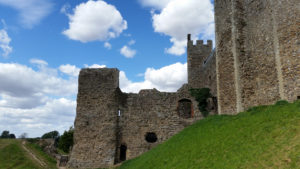
Arundel Castle is a restored and remodeled medieval castle in Arundel, West Sussex, England. It was established by Roger de Montgomery on Christmas Day 1067. Roger became the first to hold the earldom of Arundel by the graces of William the Conqueror. The castle was

Read More
Stanton Drew Stone Circles

The Stanton Drew stone circles are just outside the village of Stanton Drew in the English county of Somerset. The largest stone circle is the Great Circle, 113 meters in diameter and the second largest stone circle in Britain (after Avebury); it is considered to

Read More
Tower of London

Victorious at the Battle of Hastings on 14 October 1066, the invading Duke of Normandy, William the Conqueror, spent the rest of the year securing his holdings by fortifying key positions. He founded several castles along the way, but took a circuitous route toward London;

Read More
Grime’s Graves

Grime’s Graves is a large Neolithic flint mining complex in Norfolk, England. It was worked between c. 2600 and c. 2300 BC, although production may have continued well into the Bronze and Iron Ages (and later) owing to the low cost of flint compared with

Read More
Share on facebook
Share on twitter
Share on linkedin
Share on pinterest
error: