
Menu
 
Portfolio
 
Terms of Use
 

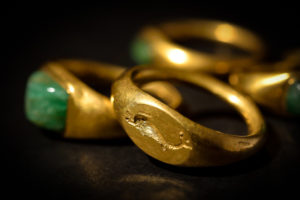
Fenwick Treasure

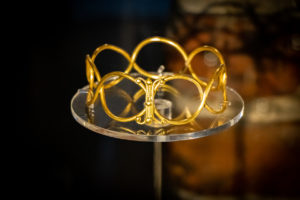
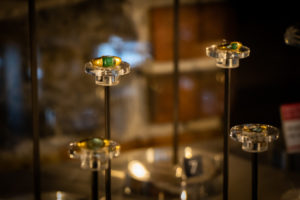
Buried for safe-keeping below the floor of a house in Roman Colchester during the Boudican revolt in AD 61. The treasure consists of 26 Roman republican coins, mostly silver, and which had been kept in a bag; the remains of a small wooden and silver jewelry box or pyxis; a gold bracelet; two gold armlets; a copper-alloy amulet necklace or bulla; a silver armlet decorated with images of panthers; two silver bracelets; five gold finger-rings, one of which is decorated with the image of a dolphin; a silver chain and loop; a pair of gold earrings; a pair of pearl earrings; and a tiny glass intaglio engraved with the image of a panther. These represent items of male and female jewelry, and the recurring motif of panthers may indicate an association with the name of the owner. One of the coins is a fascinating silver legionary denarius of Marcus Antonius, issued in 32-31 BC: it is inscribed ‘Legio XVII Classica’ and it may represent an issue of Roman military four-monthly pay on campaign or a special one-off payment on the day before the famous naval battle of Actium. The Fenwick treasure includes some beautiful jewelry and tells a remarkable story, but the silver legionary denarius has a remarkable story all of its own
More posts..

Cheddar Gorge & Caves

  Cheddar Gorge & Caves: People have used the caves in Cheddar Gorge for shelter for 40,000 years. We derive this from evidence found in and around the caves. Cheddar Man is famous as Britain’s oldest complete skeleton. Found buried in Gough’s Cave in 1903,

Read More
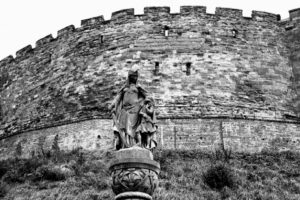
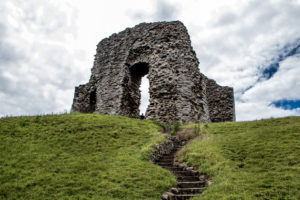
Carmarthen Castle

Carmarthen Castle is a ruined castle in Carmarthen, West Wales, UK. First built by Walter, Sheriff of Gloucester in the early 1100s, the castle was captured and destroyed on several occasions before being rebuilt in stone during the 1190s. The castle was captured by Owain

Read More
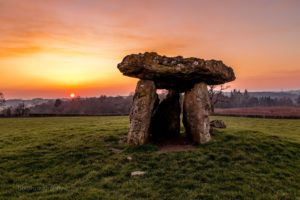
Kit’s Coty

 Kit’s Coty is a chambered long barrow near the village of Aylesford in the southeastern English county of Kent. Constructed circa 4000 BCE, during the Early Neolithic period of British prehistory.   The name “Kits Coty” allegedly means “Tomb in the Forest” according to signs

Read More
The Rollright Stones

  The Rollright Stones is a complex of three Neolithic and Bronze Age megalithic monuments near the village of Long Compton, on the borders of Oxfordshire and Warwickshire. Constructed from local oolitic limestone, the three monuments now known as the King’s Men and the Whispering

Read More
Share on facebook
Share on twitter
Share on linkedin
Share on pinterest
error: