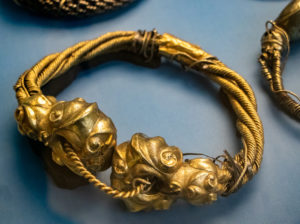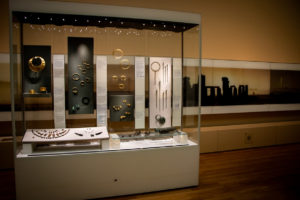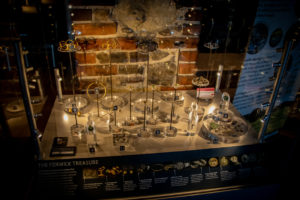


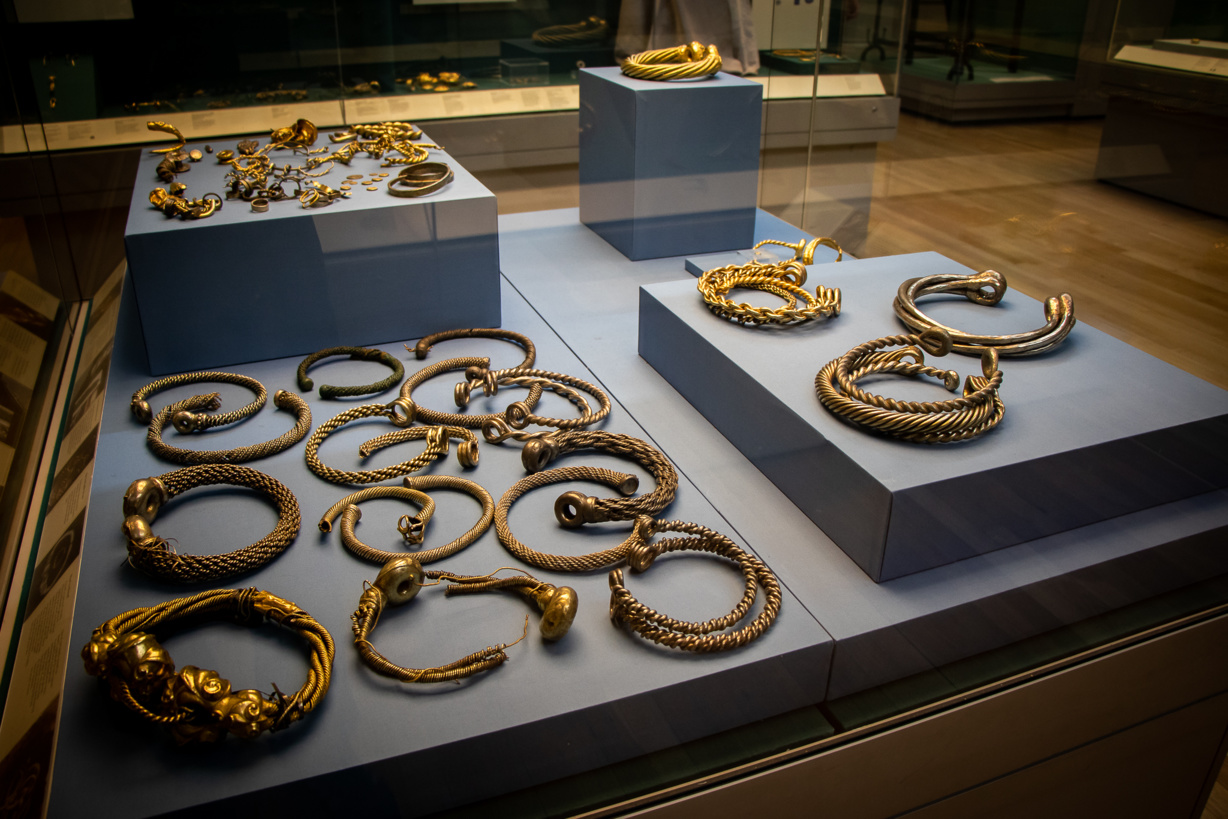
The Snettisham Hoard or Snettisham Treasure is a series of discoveries of Iron Age precious metal, found in the Snettisham area of the English county of Norfolk between 1948 and 1973.
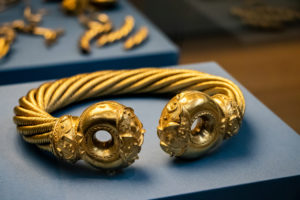
The hoard consists of the metal, jet, and over 150 gold/silver/copper alloy torc fragments, over 70 of which form complete torcs, dating from BC 70. Probably the most famous item from the hoard is the Great Torc from Snettisham, which is now held by the British Museum. Though the origins are unknown, it is of a high enough quality to have been a royal treasure of the Iceni.
Recent electron microscopy research by the British Museum reveals the wear patterns in the torcs, the chemical composition of the metal, and the cut marks which reduced many of the torcs into fragments. One hypothesis suggests the deliberate destruction of valuable items was a form of votive offering.
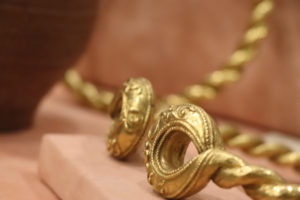
The Great Torc from Snettisham
This torc was made with great skill and tremendous care in the first half of the first century BC. It is one of the most elaborate golden objects made in the ancient world. Not even Greek, Roman, or Chinese gold workers living 2000 years ago made objects of this complexity.
The torc is made from just over a kilogram of gold mixed with silver. It is made from sixty-four threads. Each thread was 1.9 mm wide. Eight threads were twisted together at a time to make 8 separate ropes of metal. These were then twisted around each other to make the final torc. The ends of the torc were cast in molds. The hollow ends were then welded onto the ropes.