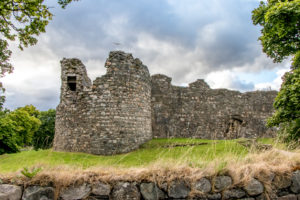



 Rhuddlan Castle is a castle located in Rhuddlan, Denbighshire, Wales. It was erected by Edward I in 1277, following the First Welsh War.
The story of Rhuddlan goes back much further than the fortress built by Edward I. Prior to the Norman occupation of lower Gwynedd, Rhuddlan was at the heart of a Welsh cantref. From here the Lords of Rhuddlan commanded the Perfeddwlad (lands of northeast Wales) on behalf of Gruffydd ap Llywelyn (1007 – 5 August 1063), the last ruler of all Wales. The town itself, however, began as a Saxon “burgh” founded by Edward the Elder.
In the late 11th century, the Normans invaded Gwynedd. Rhuddlan’s strategic position ensured that it was fought over by the Princes of Gwynedd and the Earls of Chester, with Gruffydd ap Llywelyn, who had been driven out by Harold Godwinson, re-taking the town. The remains of a Norman castle at Twthill, built-in 1086, is just to the south of the current castle; it was built by Robert of Rhuddlan, a supporter of King William I of England.
In July 1277, at the outbreak of the Welsh Wars, Edward I left Chester and established an advance base at Flint, where building work immediately began on Flint Castle. With naval assistance from 25 ships of the Cinque Ports fleet, the army pushed along the coast. By August Edward had moved his forces on to Rhuddlan, which, as was his custom, he was able to supply by the river. Three months later the town was ceded to the English Crown following the Treaty of Aberconwy between Llywelyn ap Gruffudd and Edward I.
Work on Rhuddlan Castle began immediately under the control of Master Bertram, a Gascon engineer, but construction was soon handed over to Savoyard master mason, James of St George who remained in charge until labor ceased in 1282. Besieged by the Welsh during the rebellion of 1282, until relieved by an English force led by future Amadeus V, Count of Savoy.
Edward I also created a new borough, north of his castle, away from the pre-existing Norman town and Dominican Friary. The 13th-century street layout can still be seen in the modern town. The borough, like at Flint, was defended with a pair of ditch-separated earthworks and a timber palisade. Rhuddlan Castle became a part of Edward’s Ring of Iron fortifications.