

Menu
 
Portfolio
 
Terms of Use
 

Mold Castle

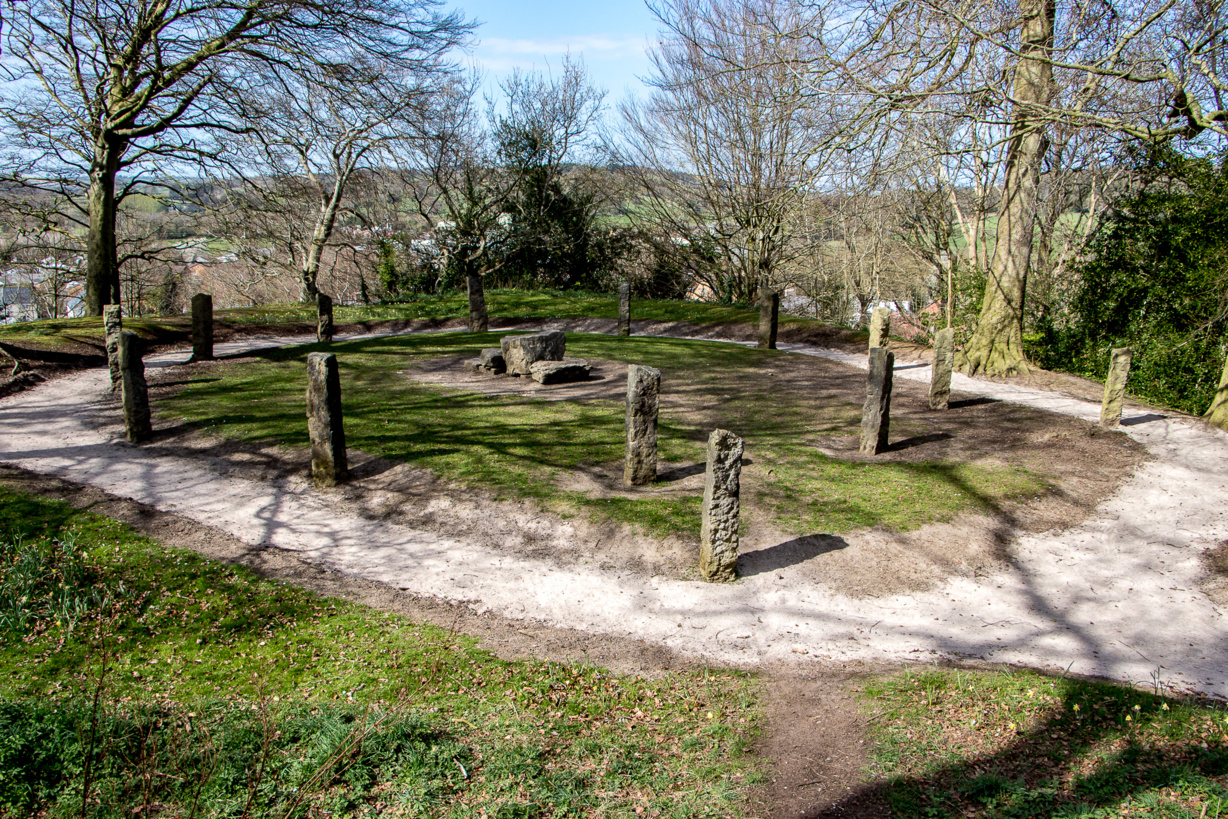
Mold Castle, on Bailey Hill in the town of Mold, Flintshire, Northeast Wales.


Mold Castle was built upon an existing earthwork. A motte and bailey fortress was erected c. 1072 – possibly by Robert de Montalt, a descendant of Eustace De Monte Alto, a Norman warrior in the service of Hugh Lupus, Earl of Chester. This family originated in Monthault, Ille-et-Vilaine, in the Duchy of Brittany, not then part of France, but it has been proposed that they took their name from ‘mont haut’, meaning ‘high hill’, and associated it with this earthwork.


This name may have become corrupted, down the years, until it became ‘Mold’. So Bailey Hill may have given the town its name. In 1146 it was captured by Owain Gwynedd. It switched hands on several occasions before a long period under Welsh control during the reign of Llywelyn ab Iorwerth. It remained a defensive structure up until the 13th century. During the English Civil War, Mold was captured by the Parliamentarians, recovered by the Royalists, and fell again to Cromwell’s forces.

 

More posts..

Staffordshire Hoard

  The Staffordshire Hoard is the largest hoard of Anglo-Saxon gold and silver metalwork yet found. It consists of over 3,500 items.   The hoard was most likely deposited in the 7th century and contains artifacts probably manufactured during the 6th and 7th centuries. It

Read More
Stirling Castle

Stirling Castle, located in Stirling, is one of the largest and most important castles in Scotland, both historically and architecturally. The castle sits atop Castle Hill, an intrusive crag, which forms part of the Stirling Sill geological formation. It is surrounded on three sides by

Read More
Stonehenge

Stonehenge is a prehistoric monument in Wiltshire, England, west of Amesbury and north of Salisbury. Stonehenge’s ring of standing stones is set within earthworks in the middle of the densest complex of Neolithic and Bronze Age monuments in England, including several hundred burial mounds. Archaeologists

Read More
Cheddar Gorge & Caves

  Cheddar Gorge & Caves: People have used the caves in Cheddar Gorge for shelter for 40,000 years. We derive this from evidence found in and around the caves. Cheddar Man is famous as Britain’s oldest complete skeleton. Found buried in Gough’s Cave in 1903,

Read More
Share on facebook
Share on twitter
Share on linkedin
Share on pinterest
error: