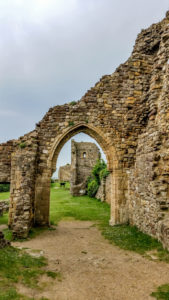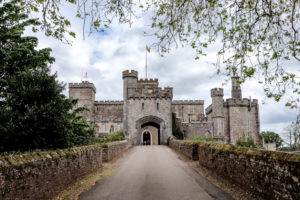



Immediately after landing in England in 1066, William of Normandy ordered three fortifications to be built, Pevensey Castle in September 1066 (re-using the Roman Saxon Shore fort of Anderitum), Hastings (prior to the Battle of Hastings), and Dover. Hastings Castle was originally built as a motte-and-bailey castle near the sea. Later that year, the famous Battle of Hastings took place some miles to the north of Hastings Castle, in which William was victorious. In 1070, William issued orders for the castle to be rebuilt in stone, along with the St Mary’s Chapel.
The Count of Eu held the castle for most of the Norman period, beginning with Robert, but King John ordered that the castle be destroyed to prevent it from falling into the hands of the Dauphin Louis. In 1220, Henry III re-fortified the castle.
In time, however, the house of Eu forfeited control of Hastings Castle, when the family heir William made the decision to keep his French assets over the English ones and was denied the right to his inheritance. In 1242, Henry III bestowed the rule of the castle and its lands to his wife’s uncle, Peter of Savoy, who then governed the estate until passing away.
In 1287, violent storms battered the south coast for many months and the soft sandstone cliffs eventually succumbed to the elements. Large sections of the face fell into the sea along with parts of the castle.
In both 1339 and 1377, the town was attacked by the French leaving many burnt buildings which included homes. Throughout the next century, erosion was unchecked and gradually more of the castle was lost to the sea.