
Menu
 
Portfolio
 
Terms of Use
 

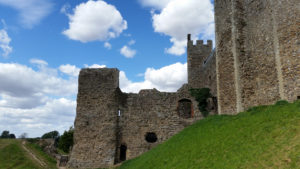
Bungay Castle

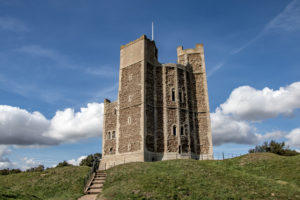
Bungay Castle is in the town of Bungay, Suffolk by the River Waveney.


Originally this was a Norman castle built by Roger Bigod of Norfolk, around 1100, which took advantage of the protection given by the curve of the River Waveney. Roger’s son, Hugh Bigod, was a prominent player in the civil war years of the Anarchy, and his loyalty was called into question during the early years of the reign of Henry II. Henry confiscated Bungay, returning it in 1164. Hugh went on to build a large square Norman keep on the site in 1165. Hugh ended up on the losing side in the Revolt of 1173–1174, Bungay was besieged, mined, and ultimately destroyed by royal forces.


The site was subsequently restored yet again to the Bigods and was further developed in 1294 by Roger Bigod, 5th Earl of Norfolk, who probably built the massive gate towers on the site. Roger fell out with Edward I and after his death the castle reverted to the Crown, falling into disrepair and ruin. From 1483, it was primarily owned by the Dukes of Norfolk until the 20th century.


More posts..

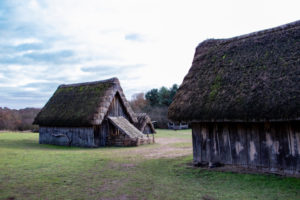
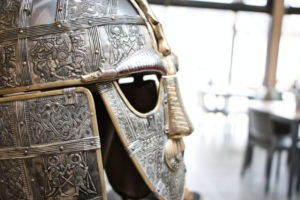
Sutton Hoo

  Sutton Hoo is of primary importance because it sheds light on a period of English history (6/7th century) that is on the margin between myth, legend, and historical documentation. Use of the site culminated at a time when Rædwald of the East Angles played

Read More
Powderham Castle

Powderham Castle is a fortified manor house situated within the parish and former manor of Powderham, within the former hundred of Exminster, Devon, about 6 miles south of the city of Exeter.   At some time after 1390 the medieval core of the present structure

Read More
Letocetum

Letocetum is the ancient remains of a Roman settlement. It was an important military staging post and posting station near the junction of Watling Street, the Roman military road to North Wales, and Icknield (or Ryknild) Street (now the A38). The site is now within

Read More
Danebury Iron Age Hill Fort

  Danebury Iron Age Hill Fort is one of the most studied Iron Age hill forts in Europe and a Scheduled Ancient Monument. ‘Iron Age’ describes the period between the end of the Bronze Age and the start of the Roman period (700BC to AD43).

Read More
Share on facebook
Share on twitter
Share on linkedin
Share on pinterest
error: