

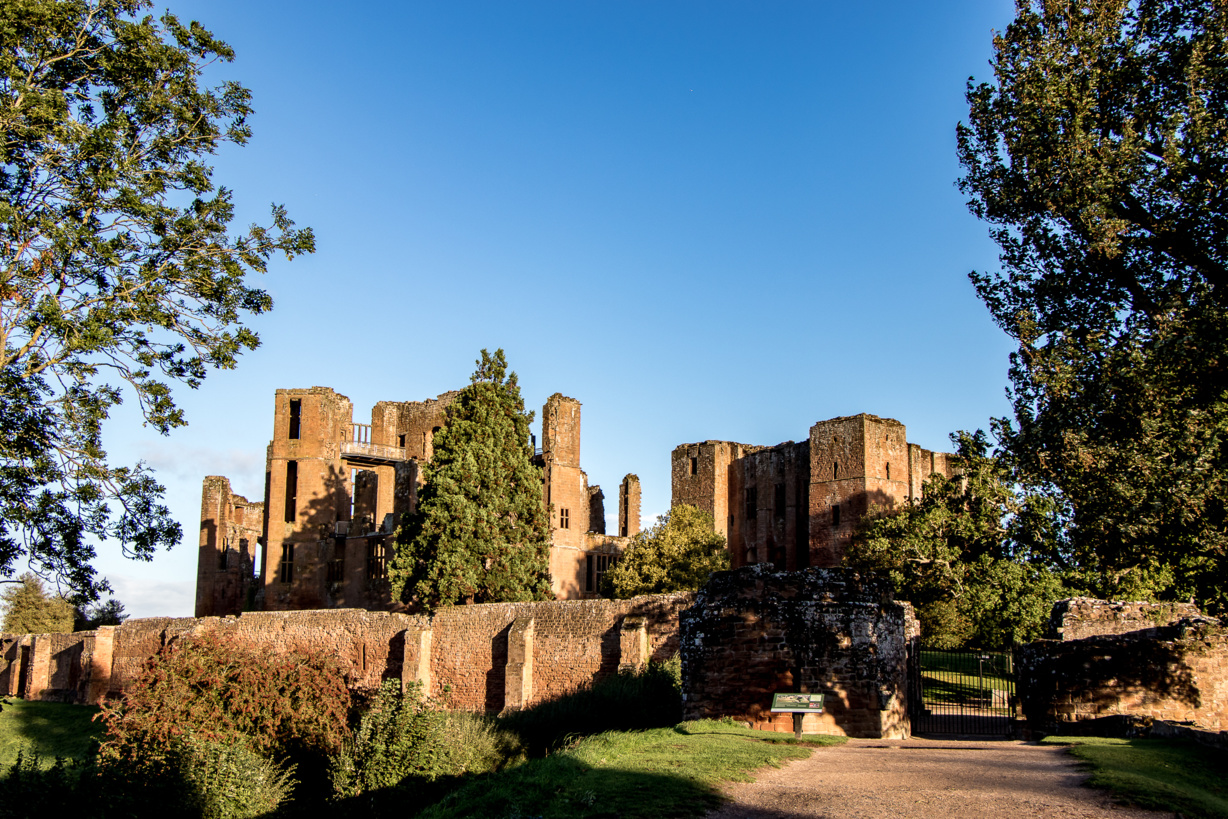
Kenilworth Castle Kenilworth Castle was founded in the early 1120s by Geoffrey de Clinton, Lord Chamberlain, and treasurer to Henry I. The castle’s original form is uncertain. It has been suggested that it consisted of a motte, an earthen mound surmounted by wooden buildings; however, the stone great tower may have been part of the original design. Clinton was a local rival to Roger de Beaumont, the Earl of Warwick and owner of the neighboring Warwick Castle, and the king made Clinton the sheriff in Warwickshire to act as a counterbalance to Beaumont’s power. It appears Clinton had begun to lose the king’s favor when in 1130 he was tried for treason, although he was soon acquitted and when he died in 1133 his son, also called Geoffrey, was only a minor when he inherited his father’s estates. These included the family estates at Stewkley and Aston Clinton in Buckinghamshire. Geoffrey II built the church of St Michael and All Angels in Stewkley in 1150, which is today one of the finest surviving original Norman Churches in England. The disputes with Beaumont continued with Geoffrey II and his uncle William de Clinton until Geoffrey was forced to come to terms with Beaumont and the dispute was eventually settled when he married Beaumont’s daughter, Agnes. These disputes and the difficult years of the Anarchy (1135–54), delayed any further development of the castle at Kenilworth.
Henry II succeeded to the throne at the end of the Anarchy but during the revolt of 1173–74, he faced a significant uprising led by his son, Henry, backed by the French crown. The conflict spread across England and Kenilworth was garrisoned by Henry II’s forces; Geoffrey II de Clinton died in this period and the castle was taken fully into royal possession, a sign of its military importance. The de Clintons by now had moved to their estates in Buckinghamshire.[10] By this point, Kenilworth Castle consisted of the great keep, the inner bailey wall, a basic causeway across the smaller lake that preceded the creation of the Great Mere, and the local chase for hunting.