
Menu
 
Portfolio
 
Terms of Use
 

Ipswich Hoard


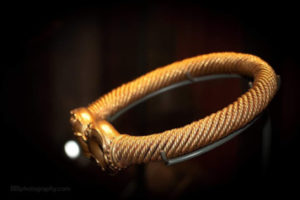
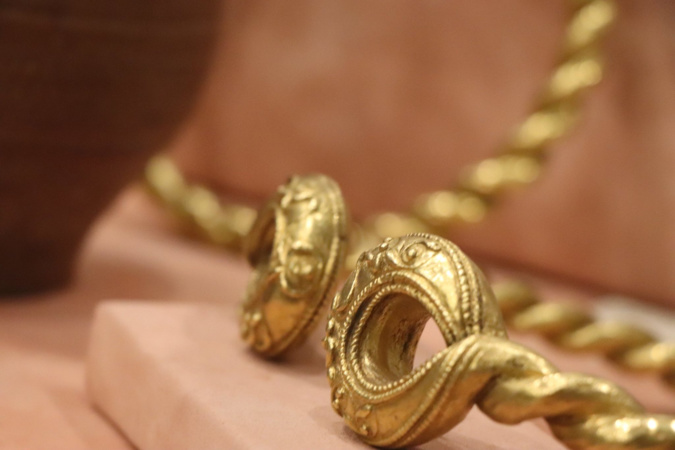
Ipswich Hoard, plus – There are two notable Ipswich Hoards. The first was a hoard of Anglo-Saxon coins discovered in 1863. The second was a hoard of six Iron Age gold torcs that was discovered in 1968 and 1969. The latter hoard has been described as second only to the Snettisham Hoard in importance as a hoard from the Iron Age.



More posts..

Avebury Stones

  West Kennet Stone Avenue (pictured) was an avenue of two parallel lines of stones that ran between the Neolithic sites of Avebury Ring and The Sanctuary. A second avenue, called Beckhampton Avenue led west from Avebury towards Beckhampton Long Barrow. Avebury Ring is a

Read More
Inverlochy Castle

Inverlochy Castle is a ruined, 13th-century castle near Inverlochy and Fort William, Highland, Scotland. The site of two battles, the castle remains largely unchanged since its construction.   Inverlochy Castle was built circa 1270–1280 by John “the Black” Comyn, Lord of Badenoch and Lochaber, and

Read More
St Lythans burial chamber

  St Lythans burial chamber is a single stone megalithic dolmen, built around 6,000 BP (before present) as part of a chambered long barrow, during the mid-Neolithic period. From the end of the last ice age (between 10,000 and 12,000 BP), Mesolithic hunter-gatherers from Central

Read More
Newark Castle, Nottinghamshire

Newark Castle, in Newark-on-Trent, in the English county of Nottinghamshire was founded in the mid 12th century by Alexander, Bishop of Lincoln. Originally a timber castle, it was rebuilt in stone towards the end of the century. Dismantled in the 17th century after the English

Read More
Share on facebook
Share on twitter
Share on linkedin
Share on pinterest
error: