
Menu
 
Portfolio
 
Terms of Use
 

Ipswich Hoard


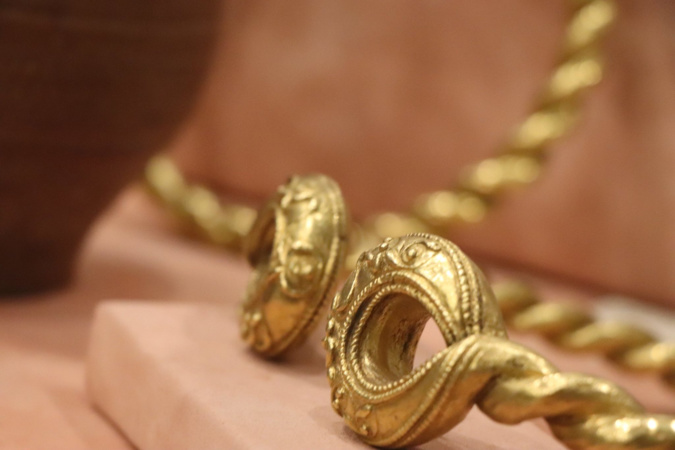
Ipswich Hoard, plus – There are two notable Ipswich Hoards. The first was a hoard of Anglo-Saxon coins discovered in 1863. The second was a hoard of six Iron Age gold torcs that was discovered in 1968 and 1969. The latter hoard has been described as second only to the Snettisham Hoard in importance as a hoard from the Iron Age.



More posts..

West Stow

Prehistoric settlement: The site at West Stow has shown evidence of human habitation throughout British prehistory. Indeed, the wider Lark Valley contains the greatest known concentration of prehistoric settlements in the region of East Anglia. Mesolithic: Excavation at West Stow has discovered evidence for hunter-gatherers

Read More
Urquhart Castle

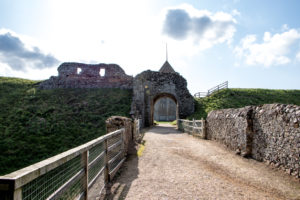
Urquhart Castle sits beside Loch Ness in the Highlands of Scotland. The castle is on the A82 road, 21 kilometers south-west of Inverness and 2 kilometers east of the village of Drumnadrochit.   The name Urquhart derives from the 7th-century form Airdchartdan, itself a mix

Read More
The Rollright Stones

  The Rollright Stones is a complex of three Neolithic and Bronze Age megalithic monuments near the village of Long Compton, on the borders of Oxfordshire and Warwickshire. Constructed from local oolitic limestone, the three monuments now known as the King’s Men and the Whispering

Read More
Stonehenge

Stonehenge is a prehistoric monument in Wiltshire, England, west of Amesbury and north of Salisbury. Stonehenge’s ring of standing stones is set within earthworks in the middle of the densest complex of Neolithic and Bronze Age monuments in England, including several hundred burial mounds. Archaeologists

Read More
Share on facebook
Share on twitter
Share on linkedin
Share on pinterest
error: