
Menu
 
Portfolio
 
Terms of Use
 

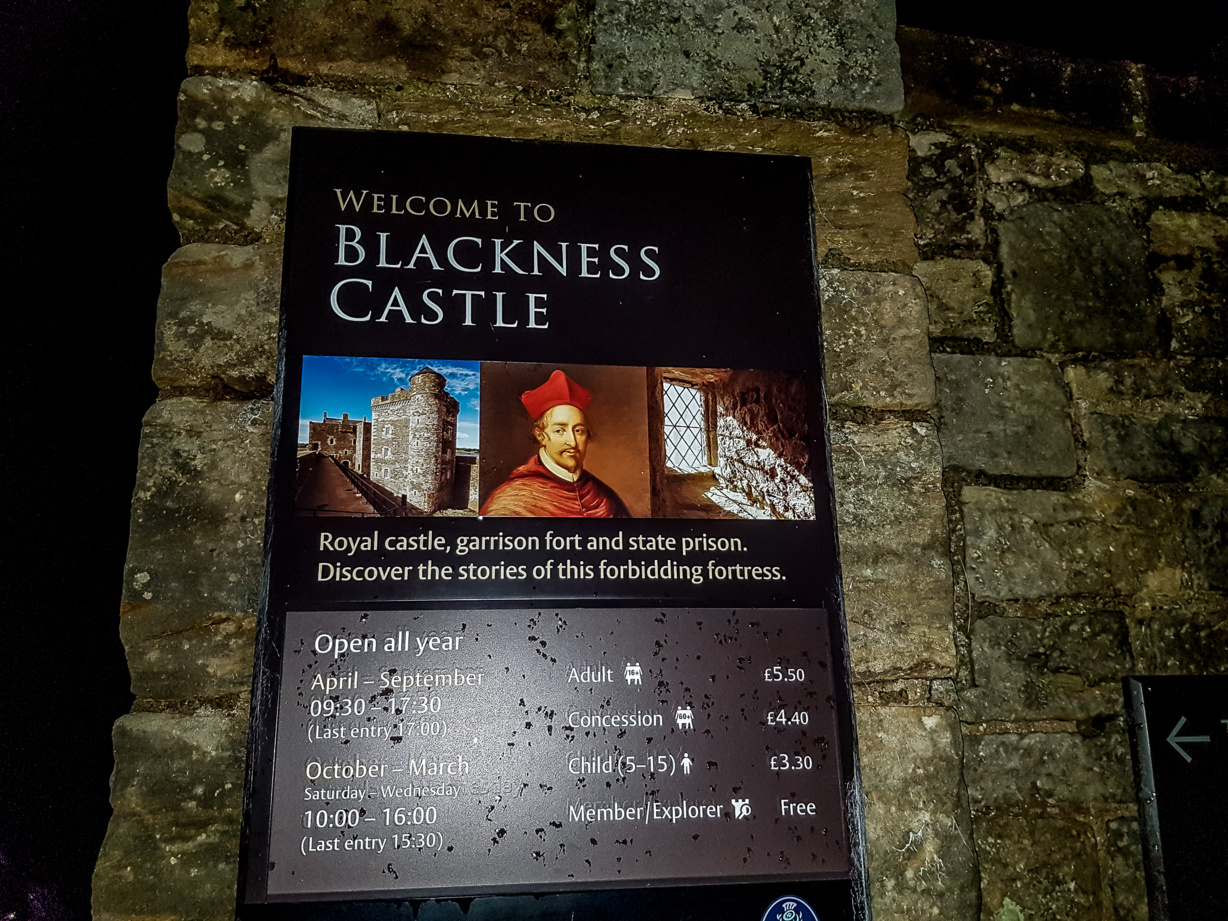
Blackness Castle

Blackness Castle is a 15th-century fortress, near the village of Blackness, Scotland, on the south shore of the Firth of Forth.


It was built, probably on the site of an earlier fort, by Sir George Crichton in the 1440s. At this time, Blackness was the main port serving the Royal Burgh of Linlithgow, one of the main residences of the Scottish monarch. The castle, together with the Crichton lands, passed to James II of Scotland in 1453, and the castle has been Crown property ever since. It served as a state prison, holding such prisoners as Cardinal Beaton and the 6th Earl of Angus.
 

More posts..

Thor’s Cave

  Excavations in 1864–65 and 1927–35 found human and animal remains, stone tools, pottery, amber beads, and bronze items within Thor’s Cave and the adjacent Thor’s Fissure Cavern. The caves are estimated to have contained the burial sites of at least seven people. The finds

Read More
Inverlochy Castle

Inverlochy Castle is a ruined, 13th-century castle near Inverlochy and Fort William, Highland, Scotland. The site of two battles, the castle remains largely unchanged since its construction.   Inverlochy Castle was built circa 1270–1280 by John “the Black” Comyn, Lord of Badenoch and Lochaber, and

Read More
Hastings Castle

Immediately after landing in England in 1066, William of Normandy ordered three fortifications to be built, Pevensey Castle in September 1066 (re-using the Roman Saxon Shore fort of Anderitum), Hastings (prior to the Battle of Hastings), and Dover. Hastings Castle was originally built as a

Read More
St Lythans burial chamber

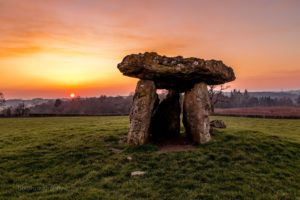
  St Lythans burial chamber is a single stone megalithic dolmen, built around 6,000 BP (before present) as part of a chambered long barrow, during the mid-Neolithic period. From the end of the last ice age (between 10,000 and 12,000 BP), Mesolithic hunter-gatherers from Central

Read More
Share on facebook
Share on twitter
Share on linkedin
Share on pinterest
error: