
Menu
 
Portfolio
 
Terms of Use
 

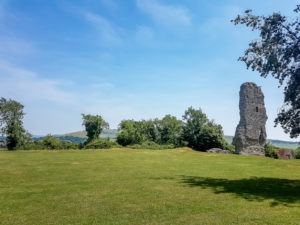
Braemar Castle

Braemar Castle is situated near the village of Braemar in Aberdeenshire, Scotland. It is a possession of the chief of Clan Farquharson.


From the Late Middle Ages, the castle was a stronghold of the Earls of Mar. The present Braemar Castle was constructed in 1628 by John Erskine, Earl of Mar, as a hunting lodge and to counter the rising power of the Farquharsons, replacing an older building, which was the successor of nearby Kindrochit Castle, which dates from the 11th century AD. The siting of Kindrochit Castle was based upon the strategic location of this site relative to historic crossings of the Grampian Mounth.


An important garrison after the 1745 Jacobite rising, Braemar Castle had been attacked and burned by John Farquharson, the Black Colonel of Inverey during the Jacobite rising of 1689, to prevent it being used as a garrison by Government troops. In 1716 the castle was forfeited to the Crown following the Earl of Mar’s leadership of 1715 Jacobite rising. The castle and lands were purchased by John Farquharson, 9th Laird of Invercauld but the building was left in ruins until 1748.
More posts..

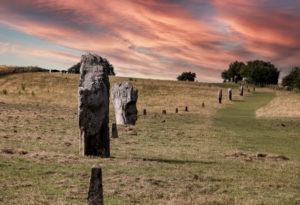
Avebury Stones

  West Kennet Stone Avenue (pictured) was an avenue of two parallel lines of stones that ran between the Neolithic sites of Avebury Ring and The Sanctuary. A second avenue, called Beckhampton Avenue led west from Avebury towards Beckhampton Long Barrow. Avebury Ring is a

Read More
Stanton Drew Stone Circles

The Stanton Drew stone circles are just outside the village of Stanton Drew in the English county of Somerset. The largest stone circle is the Great Circle, 113 meters in diameter and the second largest stone circle in Britain (after Avebury); it is considered to

Read More
Bramber Castle

Bramber Castle is a Norman motte-and-bailey castle formerly the caput of the large feudal barony of Bramber long held by the Braose family. It is situated in the village of Bramber, West Sussex, near the town of Steyning, overlooking the River Adur.   Surveys indicate

Read More
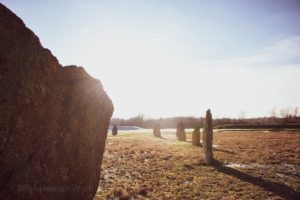
Devil’s Quoits

  Devil’s Quoits Henge and Stone Circle – The site is believed to be from the Neolithic Period, between 4000 and 5000 years old, and is a Scheduled Ancient Monument. The henge is a major class II circle henge monument of the Late Neolithic date.

Read More
Share on facebook
Share on twitter
Share on linkedin
Share on pinterest
error: