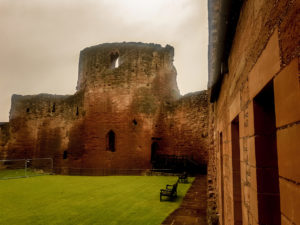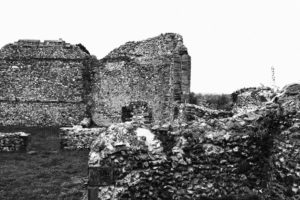


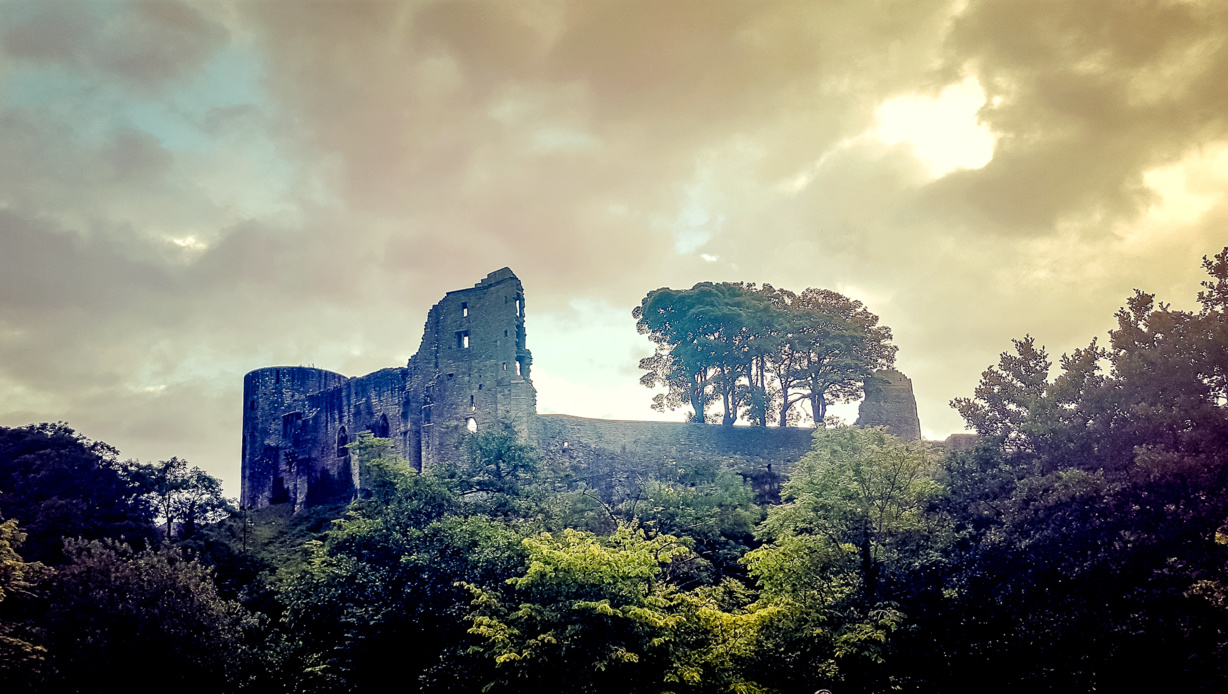
Barnard Castle is a ruined medieval castle situated in the town of the same name in County Durham.
A stone castle was built on the site of an earlier defended position from around 1095 to 1125 by Guy de Balliol. Between 1125 and 1185 his nephew Bernard de Balliol and his son Bernard II extended the building.
In 1216 the castle was besieged by Alexander II, King of Scotland. It was still held by the Balliol family although its ownership was disputed by the Bishops of Durham. When John Balliol was deposed as King of Scotland in 1296 the castle was passed to the Bishop of Durham. Around 1300 Edward I granted it to the Earl of Warwick. In the 15th century, the castle passed by marriage to the Neville family. In 1477 during the Wars of the Roses, Richard, Duke of Gloucester (later Richard III) took possession of the castle, which became one of his favorite residences.
Over the next two centuries, the Nevilles enlarged and improved the estate and created a substantial and impressive castle. During the Rising of the North, Sir George Bowes shut himself up in the castle, where he was besieged. Following the failure of the revolt, Charles Neville, 6th Earl of Westmorland was attainted for his leading role in the Rising of the North and the Neville estates were sequestered. In 1626 the Crown sold the castle and also the Neville property at Raby Castle to Sir Henry Vane.
Vane decided to make Raby his principal residence and Barnard Castle was abandoned and its contents and much of its masonry were removed for the maintenance and improvement of Raby.