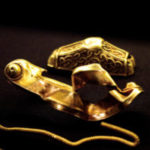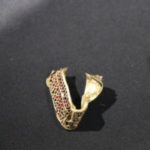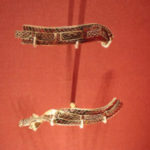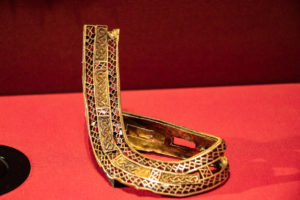


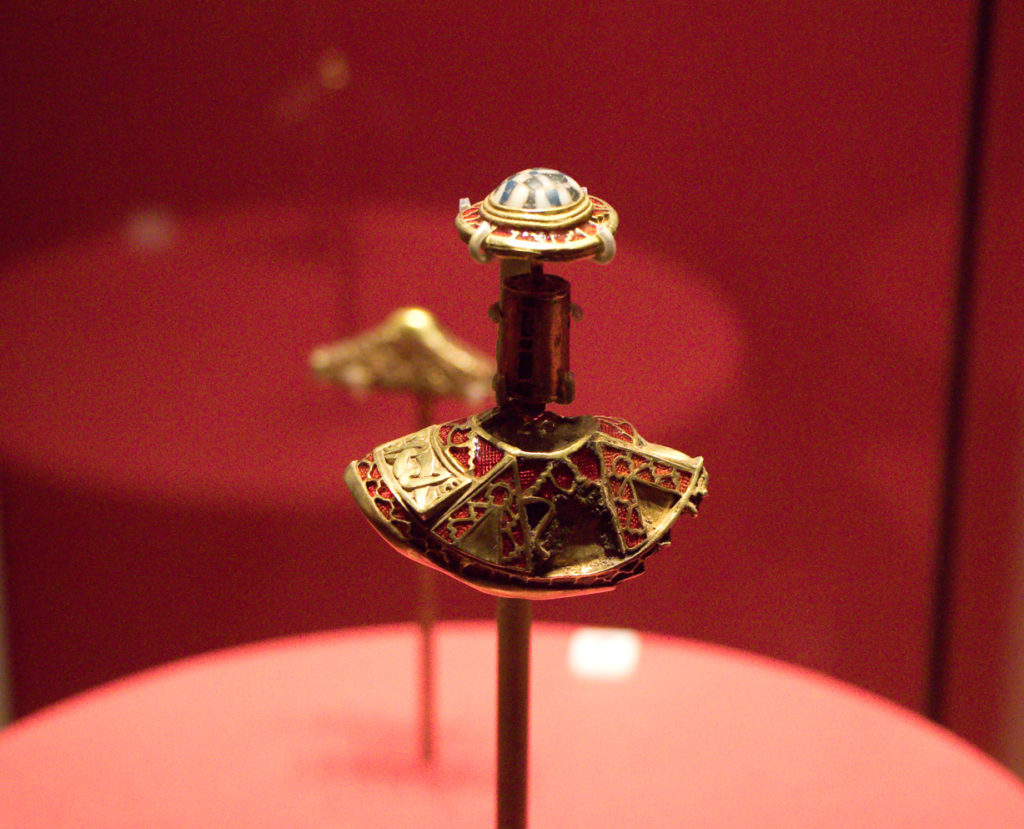
The Staffordshire Hoard is the largest hoard of Anglo-Saxon gold and silver metalwork yet found. It consists of over 3,500 items.
The hoard was most likely deposited in the 7th century and contains artifacts probably manufactured during the 6th and 7th centuries. It was discovered in 2009 in a field near the village of Hammerwich, near Lichfield, in Staffordshire, England. The location was in the Anglo-Saxon kingdom of Mercia at the time of the hoard’s deposition.
The hoard is of “radical” importance in Anglo-Saxon archaeology. The artifacts are nearly all martial in character and contain no objects specific to female uses. The average quality of the workmanship is extremely high and especially remarkable in view of a large number of individual objects, such as swords and a helmet, from which many of the fragments in the hoard came.
The hoard was deposited in a remote area, just south of the Roman Watling Street, 2 miles west of Letocetum, at the time part of the extra-parochial area of Ogley Hay, in the highland separating the Pencersæte and Tomsæte within the kingdom of Mercia.
The quality of the artifacts buried in the hoard is very high. The apparent selection of “martial” artifacts, especially the decoration of swords, does not suggest that the hoard consists simply of loot. Most of the gold and silver items appear to have been intentionally removed from the objects they were previously attached to. Brooks associates the predominantly warlike character of the artifacts in the hoard with the custom of giving war-gear (heriot) as death duty to the king upon the death of one of his noblemen. The removal of the sword pommel caps finds a parallel in Beowulf which mentions warriors stripping the pommels of their enemies’ swords.