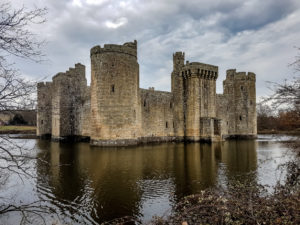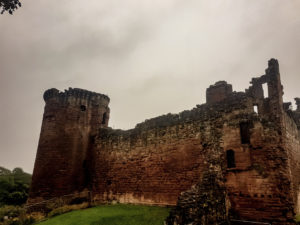


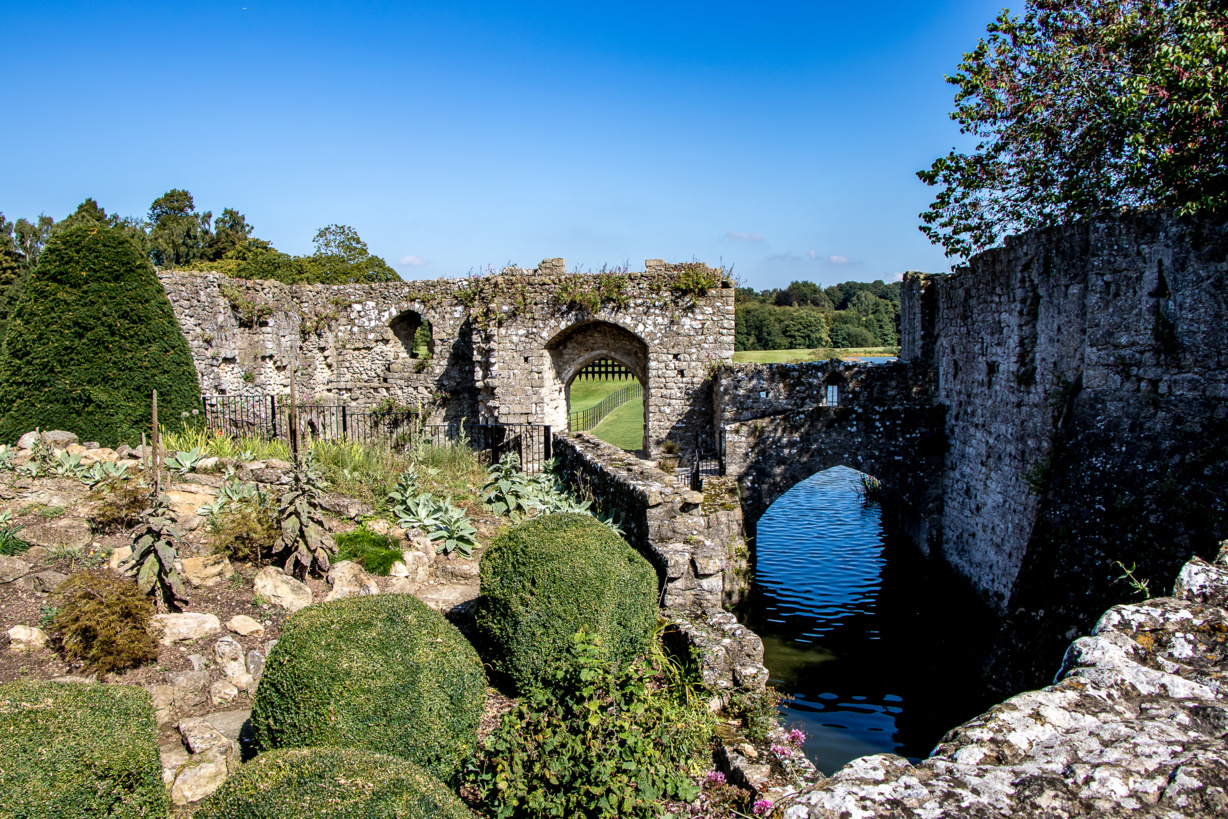
 Leeds Castle is a castle in Kent, England, 5 miles southeast of Maidstone. It is built on islands in a lake formed by the River Len to the east of the village of Leeds.
A castle has existed on the site since 1119, the first being a simple stone stronghold constructed by Robert de Crevecoeur which served as a military post in the time of Norman intrusions into England. In the 13th century, it came into the hands of King Edward I, for whom it became a favorite residence; in the 16th century, Henry VIII used it as a dwelling for his first wife, Catherine of Aragon.
From 857 the site was owned by a Saxon chief called Led or Leed who built a wooden structure on two islands in the middle of the River Len. In 1119 Robert de Crevecoeur rebuilt it in stone as a Norman stronghold and Leeds Castle descended through the de Crevecoeur family until the 1260s. What form this Norman stronghold took is uncertain because it was rebuilt and transformed in the following centuries. Adrian Pettifer speculates that it may have been a motte and bailey.
In 1278, the castle was bought by King Edward I’s Queen, Eleanor of Castile. As a favored residence of Edward’s, it saw considerable investment. The king enhanced its defenses, and it was probably Edward who created the lake that surrounds the castle. A barbican spanning three islands was also built and a gloriette with apartments for the king and queen was added. In the Late Middle Ages, the growth of the royal household meant fewer residences could accommodate the monarchy when they visited. As a result, expenditure on royal residences in southeast England generally decreased except for the Tower of London and Windsor Castle. The activity at Leeds Castle during the reign of Edward I was a notable exception to this pattern.
The castle was captured on 31 October 1321 by the forces of Edward II from Margaret de Clare, Baroness Badlesmere, wife of the castle’s constable, Bartholomew de Badlesmere, 1st Baron Badlesmere, who had left her in charge during his absence. The King had besieged Leeds after she had refused Edward’s consort Isabella of France admittance in her husband’s absence; when the latter sought to force an entry, Lady Badlesmere instructed her archers to fire upon Isabella and her party, six of whom were killed. Lady Badlesmere was kept prisoner in the Tower of London until November 1322. After Edward II died in 1327 his widow took over Leeds Castle as her primary residence.
Richard II’s first wife, Anne of Bohemia, spent the winter of 1381 at the castle on her way to be married to the king. In 1395, Richard received the French chronicler Jean Froissart there, as described in Froissart’s Chronicles.
Henry VIII transformed the castle in 1519 for his first wife, Catherine of Aragon. A painting commemorating his meeting with Francis I of France still hangs there.