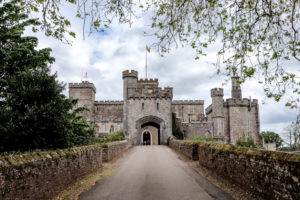



 Conwy Castle is a fortification in Conwy, located in North Wales. It was built by Edward I, during his conquest of Wales, between 1283 and 1289. Constructed as part of a wider project to create the walled town of Conwy. Over the next few centuries, the castle played an important part in several wars. It withstood the siege of Madog ap Llywelyn in the winter of 1294–95, acted as a temporary haven for Richard II in 1399, and was held for several months by forces loyal to Owain Glyndŵr in 1401.
13th century
Before the English built the town of Conwy, Aberconwy Abbey, the site was occupied by a Cistercian monastery favored by the Welsh princes., as well as the location of one of the palaces (called llys) of the Welsh princes. From Conwy: “…the oldest structure is part of the town walls, at the southern end of the east side. Here one wall and the tower of a llys [palace/court house] belonging to Llywelyn the Great and his grandson Llywelyn ap Gruffydd have been incorporated into the wall. Built on a rocky outcrop, with an apsidal tower, it is a classic, native, Welsh build and stands out from the rest of the town walls, due to the presence of four window openings. It dates from the early 13th century and is the most complete remnant of any of his Llys.”
The location also controlled an important crossing point over the River Conwy between the coastal and inland areas of North Wales, that Deganwy Castle for many years had defended. The kings of England and the Welsh princes had vied for control of the region since the 1070s and the conflict had resumed during the 13th century, leading to Edward I intervening in North Wales for the second time during his reign in 1282.
Edward invaded with a huge army, pushing north from Carmarthen and westwards from Montgomery and Chester. Edward captured Aberconwy in March 1283 and decided that the location would form the center of a new county: he would relocate the abbey eight miles up the Conwy valley to a new site at Maenan, establishing Maenan Abbey, and build a new English castle and walled town on the monastery’s former site. The ruined castle of Deganwy was abandoned and never rebuilt. Edward’s plan was a colonial enterprise and placing the new town and walls on top of such a high-status native Welsh site was in part a symbolic act to demonstrate English power.
Work began on cutting the ditch around Conwy Castle within days of Edward’s decision. The work was controlled by Sir John Bonvillars and overseen by master mason James of St. George, and the first phase of work between 1283 and 1284 focused on creating the exterior curtain walls and towers. In the second phase, from 1284 and 1286, the interior buildings were erected, while work began on the walls for the neighboring town. By 1287, the castle was complete.